

I’ve always been restless. I don’t sit still well. My mind tends to run ahead of me, constantly generating new ideas like services we could launch, improvements we could make, markets we could explore. There is always something else we could do, and if I’m not careful, I can convince myself that we should do all of it.
Early in my career, I equated that energy with leadership. Urgency felt like motion, and motion felt like progress. If we were moving fast and I was creating urgency, we were winning. If we were busy, we were building. Activity was my proxy for effectiveness. (If I'm honest, sometimes it still is.)
But over time, experience has corrected me. I have learned that frantic motion is not disciplined progress. The longer I’ve led, the more I’ve realized that great businesses are not built on bursts of intensity.
They are built on sustained discipline over time.
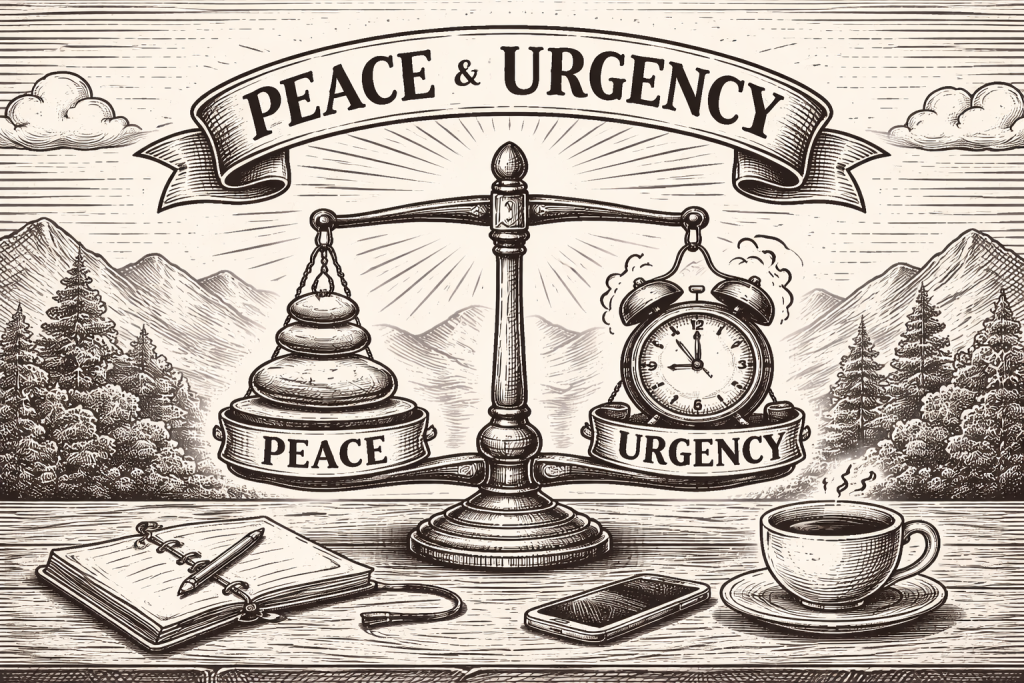
Good businesses are built by leaders who can operate with urgency while remaining grounded in peace. The tension between peace and urgency is a paradox. And learning to hold it is one of the most important leadership lessons I’ve had to learn.
The Get Big Fast Trap
Before we talk about why peace and urgency both matter, it’s worth addressing the pressure that distorts them. We live in an era obsessed with speed and scale. There is an unspoken assumption in the business world that if you are not aggressively scaling, if you are not constantly stimulated, then you are falling behind.
Every founder is told they should be building the next unicorn. Growth becomes the scoreboard. Size becomes the signal of success. The new world of hyperscale AI companies is exacerbating the feeling.
Growth itself is not the problem.
Healthy businesses should grow. In fact, I think they should thrive. The problem is the mental trap of growth for growth’s sake. That is true for businesses as well as each of us as individuals. Isn’t it?
When you lose sight of your mission, your values, and your identity – you may find that you have built a very nice prison for yourself.
The problem with growth at all cost is that you ultimately have to be willing to sacrifice everything to get it. You aren’t permitted to hold anything sacred. Not your culture, not your people, and not your customers.
Scaling amplifies whatever foundation you have built. If your systems are weak, growth magnifies the weakness. If your culture is unclear, scale multiplies confusion. Ambition without discipline is a dangerous combination.
The alternative is what I would call peaceful urgency.
Move with intensity, but only in the direction of your mission. Build systems before you scale them. Protect culture as fiercely as revenue. Choose steady compounding over explosive chaos. That approach may not make headlines, but it builds something durable.
Something good.

Traps Leaders Must Avoid and What to Do Instead
Okay great, maybe you are starting to see the value in peaceful urgency. But there are still a few traps I’ve seen teams fall into. So let’s address two pitfalls to avoid and discuss what to do instead.
Trap #1: Urgency without Peace Creates Chaos
Urgency without peace creates chaos. When leaders operate without internal steadiness, they become reactive. Decisions are driven by emotion. Priorities shift constantly. Teams feel like they are chasing a moving target. Short-term thinking creeps in, burnout follows, and eventually performance suffers.
Trap #2: Peace without Urgency Creates Complacency
On the other hand, peace without urgency creates complacency. Comfort replaces ambition. Important initiatives get postponed. Standards slowly slip. The organization loses its edge. Stability turns into stagnation.
Peace and Urgency Are Both Essential
The best leaders hold both. They are calm in demeanor but decisive in action. They are clear-headed yet fast-moving. Great leaders focus on the long game while taking meaningful steps in the short term. They do not rush recklessly, but they do not stall either.
Peace stabilizes the mind. Urgency directs the energy.
Three Ways Leaders Can Balance Peace and Urgency
1. Mission Clarity
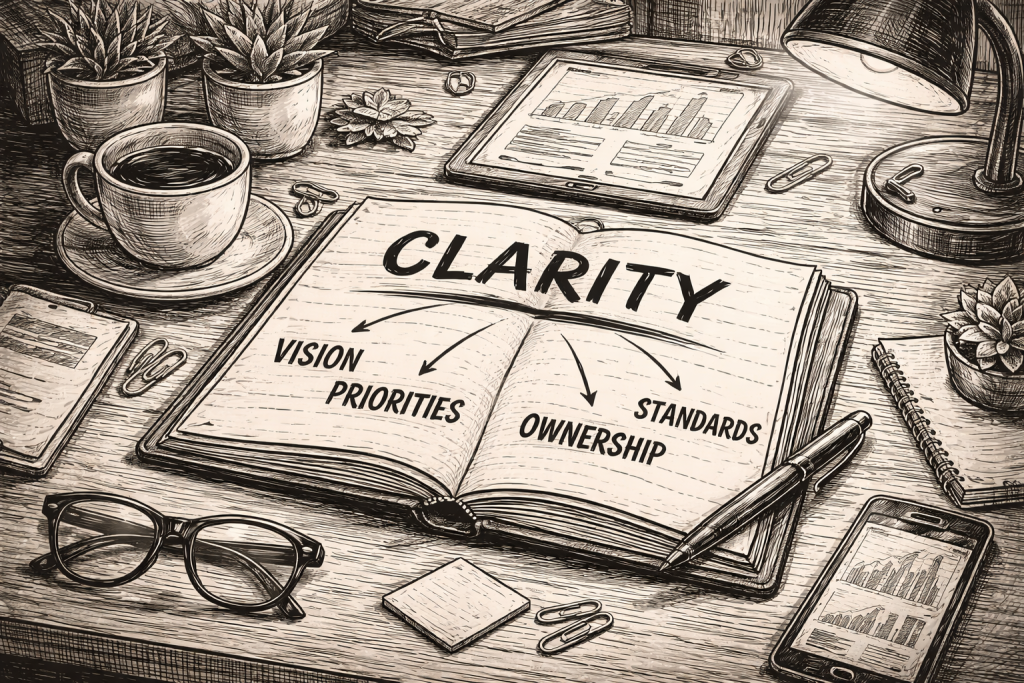
Everything begins with clarity. If your mission is fuzzy, your urgency will be scattered. If your mission is unstable, your peace will be fragile. Leaders must define exactly why they exist and make that mission simple enough to repeat and strong enough to guide decisions.
When the mission is clear, distractions lose their power. Not every opportunity deserves your attention. Not every trend requires a reaction. Clarity acts as a filter, reducing internal chaos and focusing energy where it matters most. Peace begins with knowing what game you are playing.
2. Let Your Mission Drive Your Priorities
Once the mission is clear, it must drive your priorities. Not ego, fear, or market noise. Not competitor activity. Every initiative should be evaluated through a simple question: does this advance our mission?
If it does, move quickly. Allocate resources. Act decisively. If it does not, decline it calmly—even if it looks attractive in the short term. Urgency should be selective, not universal. When everything feels urgent, nothing is strategic. When urgency is aligned with mission, speed becomes disciplined rather than reactive.
3. Find Peace in Clarity
Peace does not come from doing less. It comes from knowing you are doing the right things. When priorities align with mission, second-guessing decreases. Emotional volatility drops. Leaders can make decisions quickly without feeling frantic because they are not constantly questioning direction.
Teams mirror the emotional temperature of their leaders. A calm leader creates a stable environment. Stability, in turn, enables speed. Emotional control is not just a personality trait; it is a leadership responsibility. When clarity is present and discipline is consistent, peace becomes the byproduct.
A Call to Sustained Discipline
The temptation in business will always be short-term thinking. Quarterly pressure, market noise, shiny objects, competitor reactions, and the constant drumbeat of “get big fast” all push leaders toward reactive urgency. But building something enduring requires a different posture.
It requires commitment to the long term, steady discipline, and controlled urgency and calm conviction. It requires leaders who can resist the pressure to chase speed for its own sake and instead commit to consistent, focused execution.
Great leaders do not sprint recklessly or drift lazily. They move steadily with purpose, and when it is time to accelerate, they do so without panic. They understand that sustained discipline over time beats scattered intensity every time.
Lead with peace. Act with urgency. Commit to the long game.
And build something that lasts.
Something good.
 Christian Hyatt