

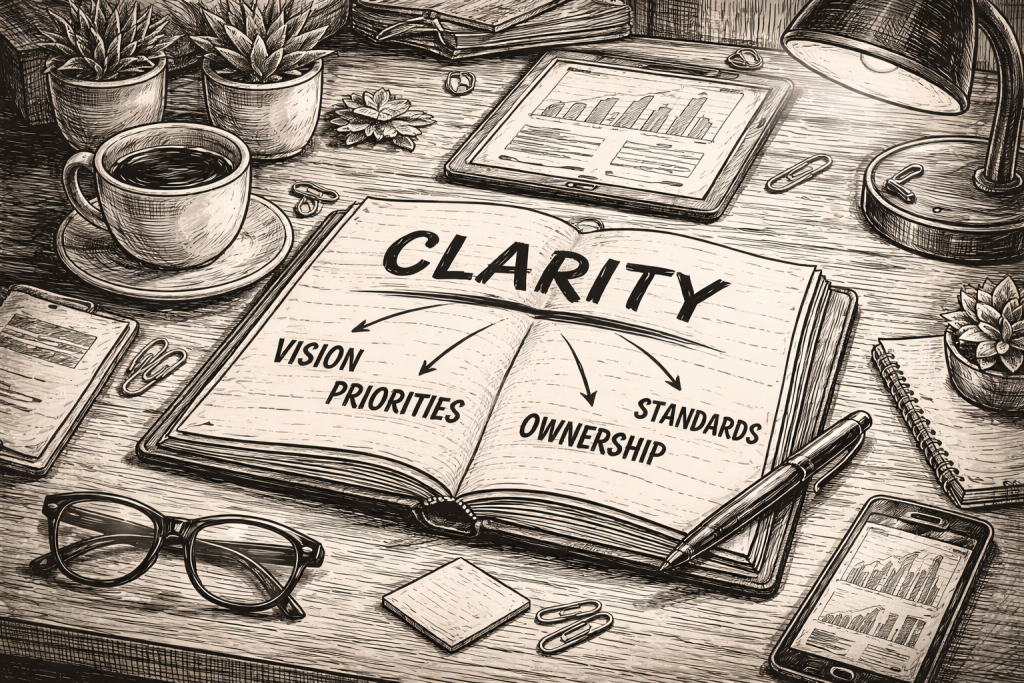
I recently read the book "The 4 Obsessions of an Extraordinary Executive" by Patrick Lencioni. Patrick says that clarity is the most important thing a leader should focus their time. First, you have to be clear to yourself. Then to your team. And ultimately clear to the marketplace you want to serve. Clarity focuses the energy of you and your team to accomplish great things.
Great cultures are cultures of clarity.
And if you aren't clear, there are important consequences. Leaders who are confused lose confidence and become indecisive. Indecisive teams are slow to act. Teams that are slow to act fall behind. And falling behind is how you kill a company.
Cultures that do not have a clear mission fail.
Why Clarity Matters
My experience over the last decade leading the team here it risk3sixty, is that leaders owe it to their team to own the burden of communication and clarity. It is an important gift that leaders can offer to their team that will have an impact on the entire culture.
Here’s three ways I’ve seen clarity make an important impact:
#1: Clarity Reduces Anxiety
Clarity matters first because it reduces anxiety. Most teams can handle ambitious goals and high standards. In fact, high performers are energized by them. What drains a team is uncertainty. When people don’t know what success looks like, when priorities seem to shift without explanation, or when expectations are implied but never defined, stress fills the gaps.
People begin to guess. They hedge. They second-guess themselves and each other. Energy that should be directed toward serving customers and building value gets redirected toward managing ambiguity.
When a leader provides clarity about things like goals, expectations, and direction it creates stability. People can focus. They can execute. They can take ownership because they understand the playing field. In that sense, clarity is one of the most practical ways a leader can care for their team.
#2. Clarity Accelerates Execution
Clarity also accelerates execution. Confused teams hesitate. They wait for permission, revisit decisions that were never clearly made, and duplicate work because ownership wasn’t explicit. Teams also tend to spend time debating things that should have been defined upfront.
Clear teams move. When priorities are explicit, trade-offs become easier. When decision rights are clear, bottlenecks shrink. When ownership is defined, accountability strengthens. Speed is rarely about asking people to work longer hours. More often, it’s about removing ambiguity so people can work decisively. Clarity creates velocity.
#3. Clarity Builds Trust
Just as importantly, clarity builds trust. Trust doesn’t grow in an environment of constant guessing. If expectations are unclear, disappointment becomes inevitable. When standards are fuzzy, performance feedback feels arbitrary. If direction changes without context, confidence erodes.
But when an entire leadership team is consistent in their messages predictability emerges. And predictability builds trust. People may not always agree with every decision, but they will respect and trust a leader who is clear about why a decision was made and what it means. Clarity doesn’t eliminate hard conversations; but it does remove the some of the second guessing.

Clarity Has Broad Reaching Impacts
Let me be clear. All of this doesn't just matter for good performance. It matters for good culture.
Let me show you how lack of clarity can turn into a deadly spiral:
- It starts with leaders that either do not know the mission or have failed to communicate it
- If you don't know the mission, you don't know how to be successful
- If you don't know how to be successful, you are guessing
- If you are guessing, you can't hold each other accountable
- Lack of accountability creates a culture filled with nervous energy, politics, anxiety, entitlement, unclear paths to promotion, infighting, and resentment
Are you starting to see what I mean about the importance of clarity?
What Leaders Must Be Clear About
Yeah, leaders need to be clear. But what should they be clear about?
I have found that there are four key areas where clarity is non-negotiable. You can use this as a punch list if you want to focus your energy:
#1: Vision and Direction
First, vision and direction. Where are we going? Why does it matter? What does success look like? If someone on the team can’t articulate the destination in simple terms, that’s not their failure - it’s a leadership gap. Vision must be repeated long after the leader is tired of hearing themselves say it. Clarity requires repetition.
Example: Check out how we define purpose at risk3sixty.
#2: Priorities
Second, priorities. Everything cannot be important. Leaders must define what matters most right now and, just as importantly, what does not. What are we saying no to in this season? Organizations drift when priorities blur. Focus sharpens when leaders are willing to name the few things that truly matter.
Example: Check out how we define priorities at risk3sixty.
#3: Roles and Ownership
Third, roles and ownership. Who owns this? Who decides? How do I contribute? Few things create more friction than unclear ownership. When everyone owns it, no one owns it. Clear ownership is not about control; it’s about empowerment. When someone knows they are accountable, they step into that responsibility with confidence.
Example: Check out how we defined roles at risk3sixty.
#4. Standards
Finally, standards. What does “great” look like here? What is acceptable versus exceptional? And which behaviors are rewarded and which are not? Culture is shaped less by what we declare and more by what we consistently reinforce. If standards are undefined, culture becomes inconsistent. Clear standards elevate everyone because they remove guesswork and create a shared understanding of excellence.
Example: Check out how we define values at risk3sixty.
An Example of Clarity at risk3sixty
Just to be clear myself, let me offer some a real world example of how clarity plays out in the real world for us at risk3sixty.
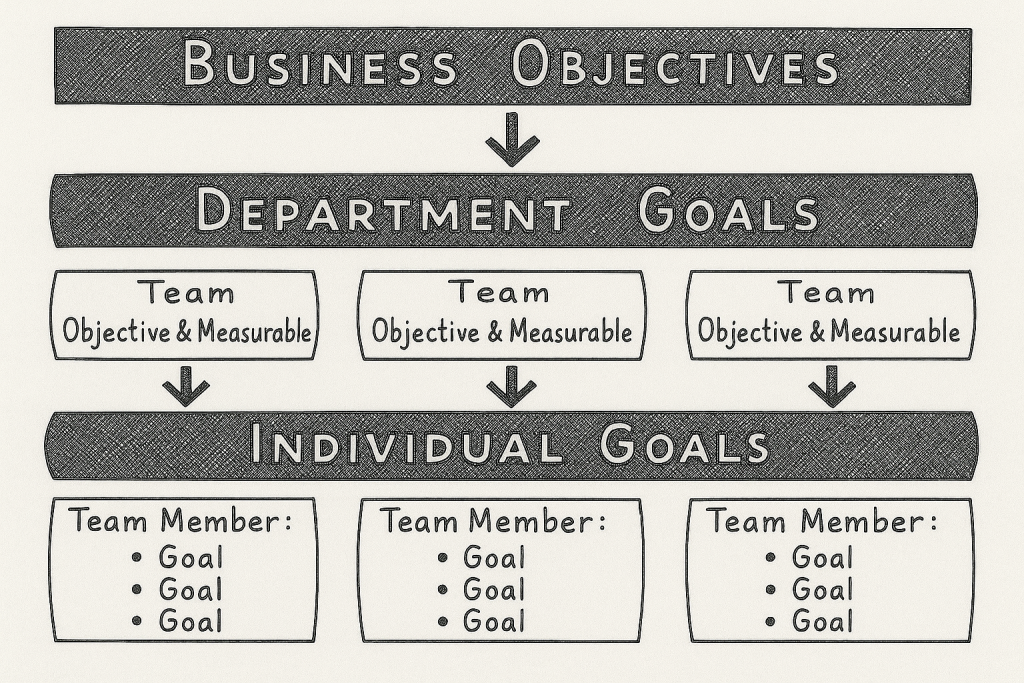
My belief is that it is up to the leadership team to make clear where we are going and why we are going there. For us, that means defining a long-term target (we call that our BHAG), the mission for the current year, and the goals and KPIs that will help us achieve it all. Oh, and it all has to be clear and simple to understand.
We call this "mission to metrics" alignment and here's how it fits together:
- BHAG: A very clear long-term target to focus our energy. Everything we do is focused on achieving this outcome.
- Annual Plan: An annual plan that leads us toward our BHAG, but considers the short-term strategy, tactics, and practical constraints for the year to come. This is what we focus most of our attention on in any given day.
- Clear Metrics: KPIs and metrics attached to our annual plan across all levels of the business: Company, each department, and individuals. This becomes our scoreboard.
- Tracking to Progress: A system of real time data, weekly, monthly, quarterly, and annual cadences that ensure everyone knows exactly how we are performing to plan. We call this our rhythm.
For context, these four bullet point take our leadership team months of planning (and continuous refinement) to get right. We do not wake up one morning with the answers. It takes deep analysis to find the answers - then several rounds of review to tighten up the messaging so the team can consume the information.
But its worth it.
My experience over the last 10 years is that the more dialed in and unified we are about our mission-to-metrics strategy the better our performance. And – the opposite is also true - the more ambiguous we are the worse our performance.
Clarity is an Act of Leadership
Let me leave you with this thought.
At its core, leadership is stewardship of energy. And energy flows where clarity exists.
Clarity is generous.
It requires deep thinking, courage, and repetition. It requires saying the hard thing plainly and defining what others hesitate to define.
But when a leader chooses clarity, they give their team a gift: focused energy.
Not everyone needs to be inspired every day. But everyone needs to know what matters.
If you want to serve your team well, give them clarity. It may be the most practical (and most profound) act of leadership you can offer.
 Christian Hyatt