

I am blown away by what Georgia Tech students are building right now.
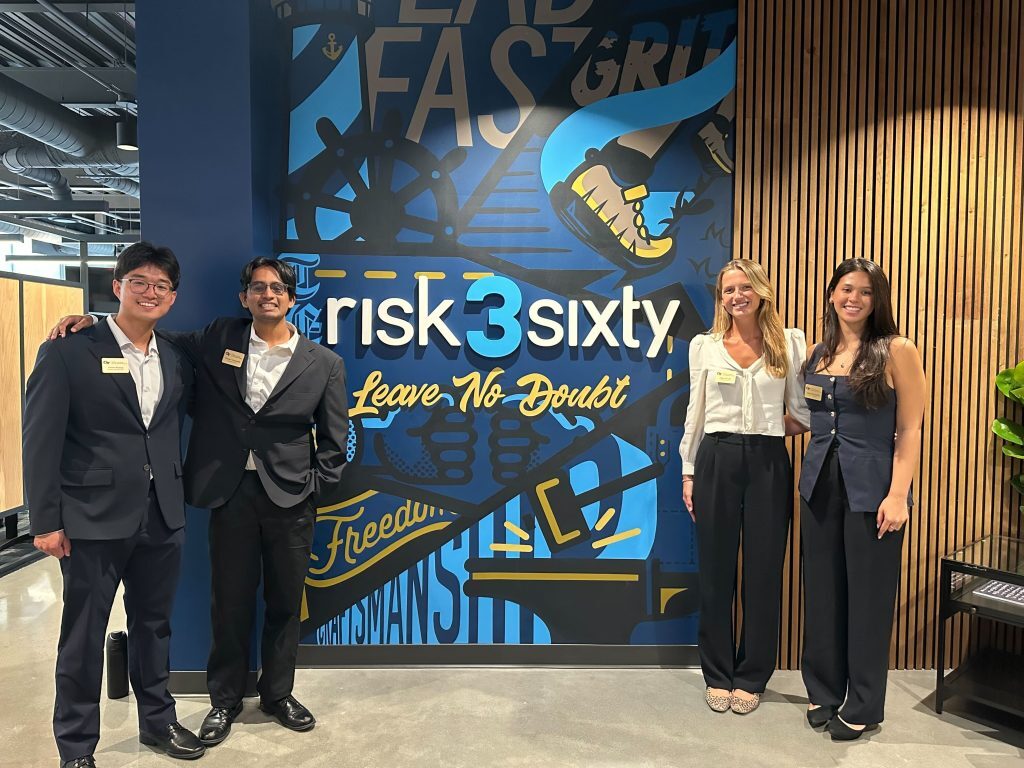
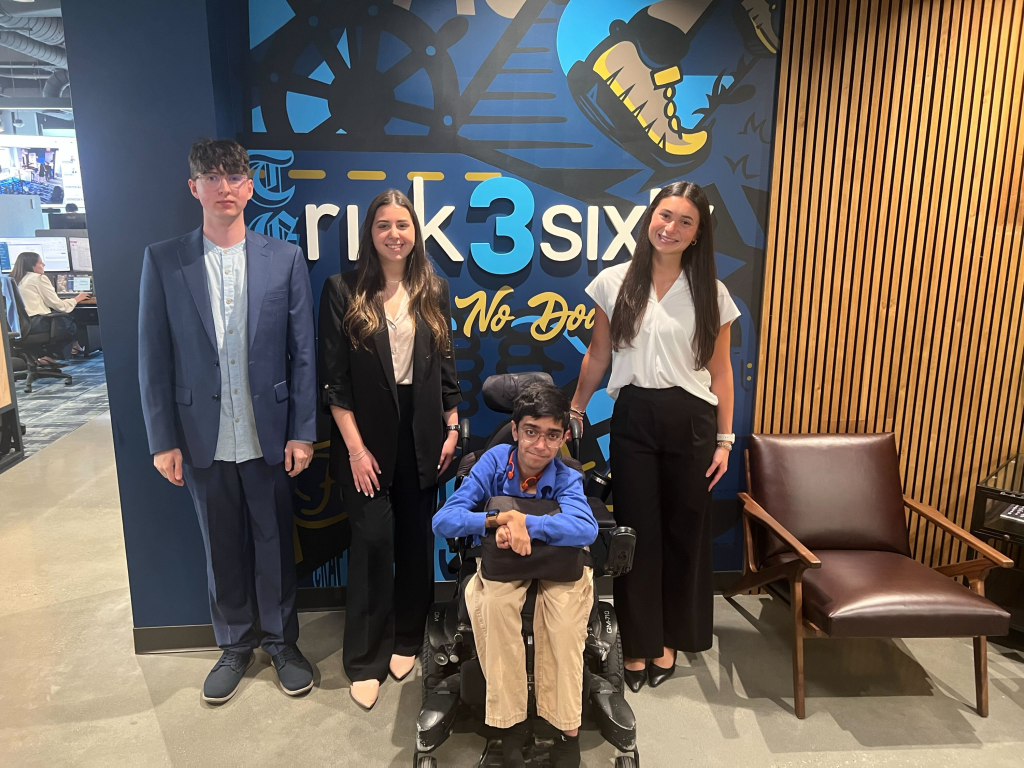
For the last several years, risk3sixty has sponsored student project teams at Georgia Tech. The goal has been simple: give students experience solving a real-world business and cybersecurity problem, let them gather requirements, build a solution, and present their work back to our team.
Over the years, I have watched these Georgia Tech student teams grow in sophistication. Early on, many of the final presentations centered around research, ideas, wireframes, and well-thought-out concepts. That was valuable in its own right. Students were learning how to think through business problems, translate ambiguity into structure, and communicate their recommendations.
But recently, something has changed.
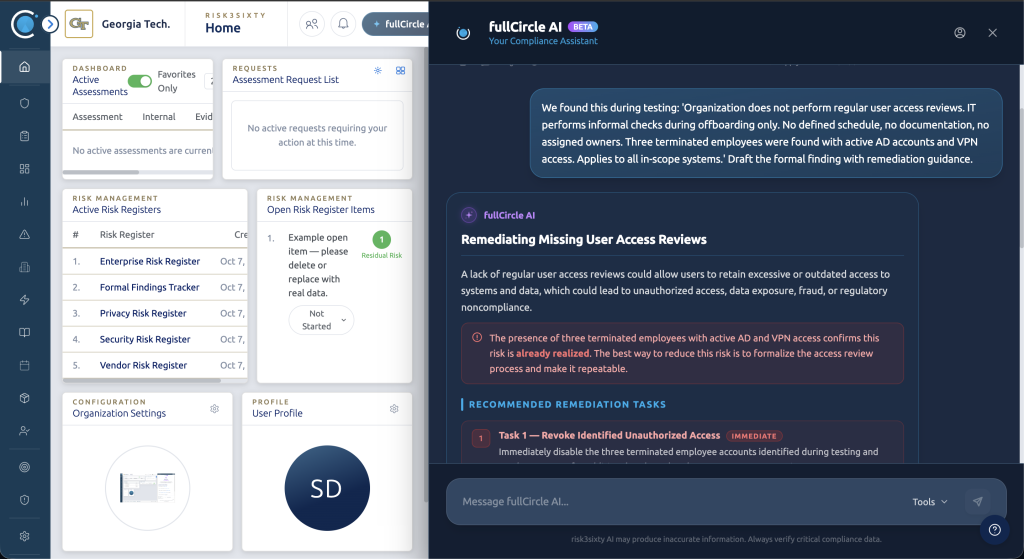
The teams are no longer just showing up with slides and wireframes. They are showing up with working products. And increasingly, they are using AI to build them.
AI Is Creating a New Generation of Cybersecurity Builders
One of the most exciting things I am seeing is that our student groups are building full blow products - not just wireframes or concept designs.
AI tools are helping the students move from an idea to a functional prototype much faster than traditional software development would allow. That allows them to test theories, iterate rapidly, and move their projects a lot further than they have been able to do in prior years.
What I am seeing is not limited to these project groups. It's a big deal for the future of work and it is a big deal for cybersecurity.
For a long time, there has been a gap between the “ideas person” and the “engineer.” Someone might understand a cybersecurity problem deeply, see an opportunity to improve a process, or identify a better way to support security teams, but still need someone else to translate that idea into software.
That gap slowed things down. It created dependencies. It meant many good ideas never made it past the whiteboard.
AI is changing that.
Now, someone with enough gumption and passion can take an idea from concept to functional MVP. They can test it. They can tweak it. They can improve it within hours instead of weeks or months.
That does not mean engineering expertise no longer matters. It absolutely does. Especially in cybersecurity, where quality, reliability, privacy, and security all matter. But it does mean the ability to create is becoming more accessible.
And I am seeing that shift in real time through these Georgia Tech students.
The MVP Is Becoming the New First Draft
What used to be a mockup is now becoming a product. That is one of the biggest mindset shifts happening right now.
In the past, a student team might present a concept and say, “Here is what this could look like.” Today, they are increasingly able to say, “Here is what we built.”
That changes the entire conversation.
A working MVP gives people something to react to. It makes the idea tangible. It surfaces real feedback. It helps teams understand what works, what does not, and what needs to change.
This is how useful cybersecurity products and internal tools start to emerge. Through building, testing, learning, and iterating.
AI is compressing that cycle dramatically. Students can now explore more ideas, test more assumptions, and get closer to a usable solution in a much shorter period of time.
That is an incredible advantage for the next generation of cybersecurity professionals.
What This Says About the Future of Cybersecurity Jobs
A lot of people are worried about the future of jobs.
I understand why. AI is moving quickly. The workforce is going to change. Certain tasks will be automated. Some roles will look very different in the years ahead.
But watching these Georgia Tech students gives me a lot of optimism.
The future workforce is not going to be made up only of people who follow instructions or complete narrow tasks. It is going to include a lot more builders. People who can think critically, apply expert judgement, and leverage AI to build products. Smart people will be a full stack solution.
The future skillset for cybersecurity professionals will be full of people who can identify cybersecurity risks. People who can understand users and business requirements, who can use AI to create practical solutions, and who can move quickly from idea to execution.
That is a very different kind of professional than what many organizations have historically hired for.
The next generation entering the cybersecurity workforce will not just ask, “What is my job description?”
They will ask, “What can I build?”
That is an exciting shift.
The Future Belongs to the Curious
The students I have watched are AI natives. They have spent the last 4 years in college adopting AI since its inception. For them, it's natural. It's just the way they do work.
They still have to think. They still have to define the problem. They still have to make decisions. They still have to present their work and explain why it matters.
AI does not replace those skills. But I can say with confidence that the new generation entering the workforce has a different relationship with AI than the rest of us.
That is why curiosity, judgment, communication, and persistence are going to matter more than ever. The people who succeed in this new environment will be the ones who are willing to experiment, learn quickly, and build their way toward better answers.
And based on what I am seeing from these Georgia Tech students, the next generation of cybersecurity professionals is ready.
The workforce is going to look a lot different. That much is clear.
But if it is full of young people who think this way, build this way, and approach problems with this level of creativity, then I am not worried.
I am excited.
 Christian Hyatt