
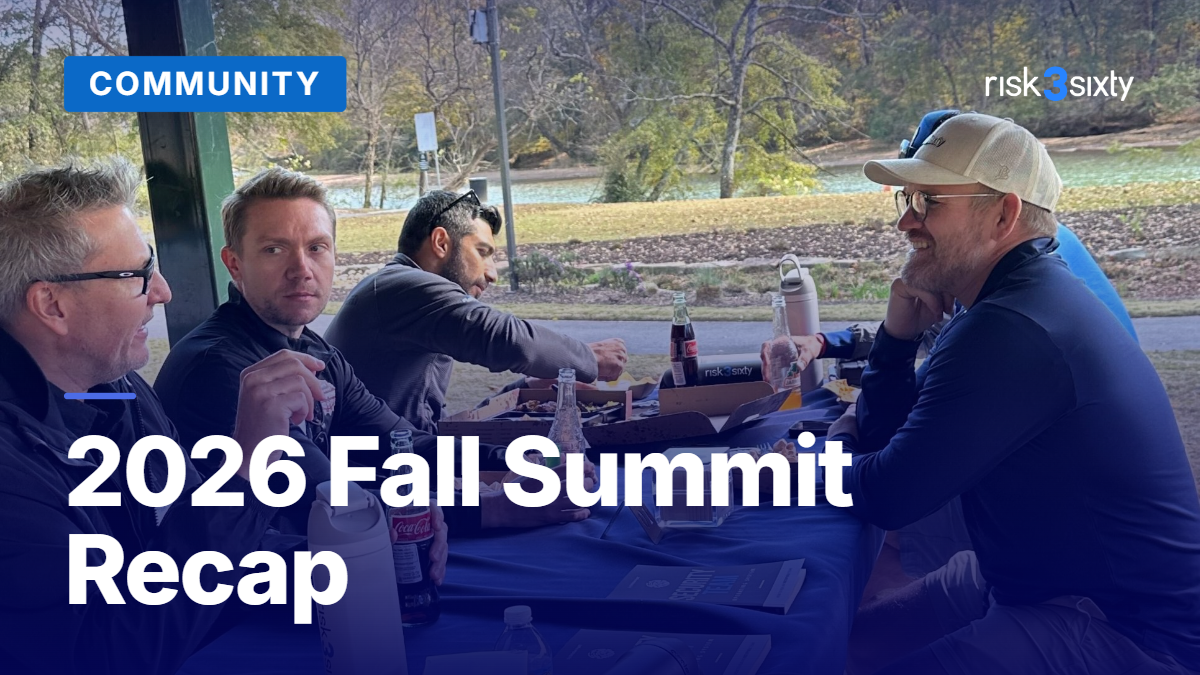
Atlanta security leaders spent a day outdoors at Perimeter’s Fall Summit, hiking and talking in small groups. This recap covers three trends from those conversations: tighter budgets and leaner teams, an AI-driven surge in vulnerabilities, and the growing push to govern AI.
What is the Fall Summit
The Fall Summit is Perimeter’s flagship event of the year. It’s one day we set aside to get Atlanta’s security leaders out of conference rooms and into the outdoors.
Most of us have been to plenty of networking events, and they serve their purpose. But the format makes it hard to go deep. You get a few minutes with someone between sessions, cover the basics, and move on before you get to the conversation you actually needed. We built the Fall Summit to change up the scenery and give that conversation room to happen.
We meet outside while Atlanta’s fall weather is at its best. We go on a hike, eat lunch from a food truck, and spend the day in small groups that we carefully curate. We match leaders by the problems they’re working on, the size of their organizations, and the stage of their careers. The point is to give people time for long, unhurried conversations with peers who understand their work, the kind you rarely get at a conference.
There are no sales pitches, no vendors, and no slides. Just a group of people who carry similar weight comparing notes on what’s working, what isn’t, and what’s coming next.
Fall Summit Highlights
This year, 30 Atlanta security leaders joined us. They came from Fortune 500 companies and from some of the best technology companies in the city. Their organizations were very different, but they’re dealing with a lot of the same problems.
The hike. We had perfect fall weather: cool air, clear skies, and the leaves just starting to turn. Walking a trail side by side changes how people talk. I noticed that nobody was checking their phone or looking for an exit.
Small groups. We set up small groups ahead of time so each leader was with peers facing similar challenges. That made it possible to skip the small talk and get into real topics like how they’re structuring their teams, issues with executive teams, budgets, and even personal challenges.
Lunch and table talk. Over lunch from the food truck, each table had a few conversation starters that went beyond security. We used a fun game called "table conversations" that I ran into at a CEO retreat earlier this year. People talked about professional and personal challenges, like leading through change, managing their careers, and balancing a demanding job with life at home. Those turned out to be some of the best conversations of the day.
Where Perimeter goes next. We closed by talking as a group about Perimeter’s future and what we want to accomplish together in 2027. It was a chance for members to help shape the group instead of just showing up to it.
Three Trends Impacting Security Leaders
One of the most valuable parts of the Fall Summit is hearing the same themes come up in conversation after conversation, without anyone planning it. Three came up again and again this year.
1. Economic Uncertainty is Impacting Budgets and Team Composition
Pretty much every security leader I have spoken with in 2026 is being asked to do more with less. Budgets grew just 5% this year, and 55% of organizations saw no increase or a cut. Layoffs are hitting healthy companies too, including Microsoft (4,800 jobs), HubSpot (7% of staff) and Canva (22% of staff). Add a record pace of acquisitions, and many leaders are dealing with reorganizations on top of everything else.
Executives also want teams to use AI to find efficiencies instead of adding headcount or tools. Several leaders at the summit described smaller teams, roles that aren’t backfilled, and a move toward strong individual contributors with fewer layers of management, the same flattening we’re seeing at large tech companies.
2. AI is Increasing the Volume and Severity of Vulnerabilities
AI is finding vulnerabilities faster than teams can fix them. The National Vulnerability Database logged as many new flaws by July as in all of 2025, and the average time to exploit dropped from 72 hours to 24. Several leaders I spoke with said point-in-time pentests are obsolete. More than one found high-risk issues right after receiving a clean report.
The fix is continuous testing and remediation through continuous threat exposure management (CTEM), whether through tools or a managed service. But volume is still the open problem: only about 1% of AI-discovered flaws are ever exploited. Everyone agreed the risk heading into 2027 is drowning in findings and fixing the wrong ones.
3. AI Governance Impacts Profit on Two Fronts
The security leaders I spoke with said they are governing AI on two fronts: internal use with the goal to cut costs, and AI built into products that drives revenue. In both cases, AI governance is now tied directly to driving profit. Most CISOs now own it: 96% have been assigned responsibility for AI governance, often without matching authority. And 87% of companies have delayed AI rollouts because their governance wasn’t ready. That's a big job, but also puts CISOs in an extermely valuable position going forward.
I also heard from several security leaders that their company is rethinking their business models. That fits into a broader market trend. HubSpot, for example, recently announced that they are "re-founding" the company and moved from selling software to delivering outcomes with AI, rebuilding its product around an agentic harness. When the business changes that much, the security program has to change with it. My read on it is that security leaders have to be more closely aligned to business strategy and objectives than ever.
What's Scheduled for 2027
Perimeter will keep the same rhythm in 2027, but we plan to level-up the experience to include four gatherings:
- Small Group Forums (February and June). These are intimate sessions of about a dozen leaders working through real problems together. We’ll bring in a guest speaker, then work through members’ issues, clarifying the problem before anyone gives advice.
- Peer Office Visit (April). A member hosts the group at their company to share how they run their program, what’s working, and what they’d do differently.
- Fall Summit (November). We’ll be back outdoors with another hike, food truck, and curated small groups.
Between events, members stay connected in our private Slack community.
If you’re a security leader in Atlanta who wants more substance from your peer network, we’d love to have you. Learn more and request an invitation.
 Christian Hyatt